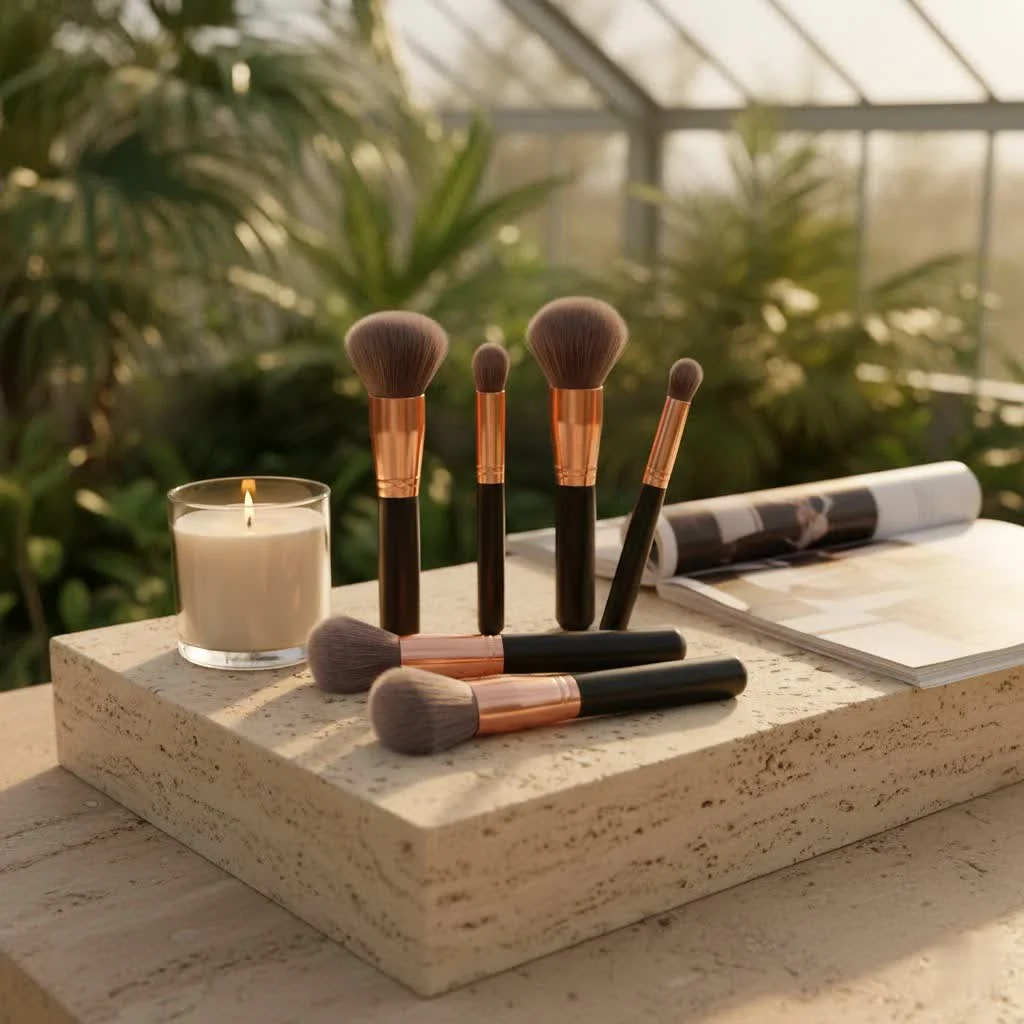
Achieving captivating eye makeup looks starts with the right tools. Eyeshadow makeup brushes are essential instruments that dictate the precision, blend, and overall finish of your eye artistry. There are six primary types of eyeshadow brushes: flat shader, blending, crease, pencil/smudge, angled, and small shader, each designed for specific tasks like packing color, diffusing lines, or adding depth.
Decoding Your Eyeshadow Brush Toolkit
Eyeshadow brushes come in a many shapes and sizes, each designed for a specific task, from packing on intense color to seamlessly blending shades.
1. Flat Shader Brush
This brush is a staple for applying a solid wash of color. Its dense, flat bristles are perfect for picking up and packing eyeshadow onto the entire eyelid, delivering maximum pigment payoff. Use a patting motion to press powder or cream eyeshadow onto the lid for vibrant results, or a sweeping motion for a softer application.
2. Blending Brush
Essential for diffusing harsh lines and creating a smooth transition between colors, blending brushes typically feature long, dome-shaped or fluffy bristles. They are ideal for dusting contour shades into the crease and blending out the edges with circular or windshield wiper motions.
3. Crease Brush
With a gentle taper and often a smaller, denser head than a blending brush, a crease brush is designed to fit precisely into the eyelid’s crease. It’s used for defining the eye socket, adding depth, and layering darker pigments for a smoky effect.
4. Pencil or Smudge Brush
Characterized by short, tightly-packed bristles with a tapered or rounded tip, the pencil brush is a multi-use precision tool. It excels at detailing work, such as brightening inner corners with shimmery shadow, darkening the outer-V for definition, or smudging eyeliner and shadow along the lash line for a softer, smoky look.
5. Angled Brush
The angled brush features slanted, firm bristles that offer incredible control. It’s perfect for creating sharp lines, applying shadow to the outer ‘V’ of the eye, or lining the eyes with powder or gel for a softer alternative to liquid liner.
6. Small Shader Brush
|
Our Picks for the Best Makeup Brushes in 2026
As an Amazon Associate I earn from qualifying purchases.
|
||
| Num | Product | Action |
|---|---|---|
| 1 | BS-MALL Makeup Brushes Premium Synthetic Foundation Powder Concealers Eye Shadows 14 Pcs Purple for Makeup Beginner or Professional with Travel Case |

|
| 2 | Professional Makeup Brushes BS-MALL With Travel Case - Kabuki Brush Eyeshadow Brush, Concealer Brush, Blush Brush Bronzer & Foundation Brush 20 Pcs, Labeled Daily Use & Versatile Occasions Gift Box |
|
| 3 | BEAKEY Makeup Brushes Set, Professional Foundation Eyeshadow Concealer Blush Powder Bronzer Applicator, 2 Blender Sponge with Beauty Paper Case |
|
| 4 | 1/2 PCS Lymphatic Contour Face Brush for Sculpting – Anti-Puffiness, Detox & Lift, Improves Skin Glow & Absorption (1 Pcs Contour Face Brush) |
|
| 5 | LAURA GELLER NEW YORK Cosmetic Professional Makeup Brushes - Cruelty-Free - 05 Full Face Brush Set 5pc |
|
| 6 | MAANGE 20 Pcs Makeup Brushes with Gift Box, Double-End Multi-functional Makeup Brushes for Blending Liquid Powder Concealer Cream Blush Buffe,CoffeeBrown |
|
| 7 | BS-MALL Professional Makeup Brush Set 18 Pcs Premium Synthetic Foundation Powder Concealers Eye Shadows Blush Makeup Brushes with Travel Case (Matte white beige) |
|
| 8 | Flat Top Kabuki Foundation Brush By KESHIMA - Premium Makeup Brush for Liquid, Cream, and Powder - Buffing, Blending, and Face - 1.2\" Top Diameter |
|
| 9 | BS-MALL Makeup Brush Set 18 Pcs Premium Synthetic Foundation Powder Concealers Eye shadows Blush Makeup Brushes with black case |
|
| 10 | EcoTools Sea Gems Cream Blush Brush, Liquid & Cream Blush Makeup Brush for Smooth Buildable Cheek Color, Dense Rounded Bristles, Sustainable Design, Vegan & Cruelty-Free, 1 Count |
|
This brush has short, dense bristles, making it excellent for applying and smudging creams or shadows along the top and bottom lash lines with precision.
Bristle Breakdown: Synthetic vs. Natural
The material of your brush bristles significantly impacts application:
- Natural Bristles: Derived from animal hair, these brushes tend to absorb powder products well, making them ideal for powder eyeshadows. They can, however, absorb liquid or cream formulas, leading to uneven application.
- Synthetic Bristles: Made from man-made fibers, synthetic brushes are often coated and sealed, preventing them from absorbing product. This makes them perfect for applying liquid, cream, and gel eyeshadows, as well as concealers. They are also known for being durable, easy to clean, and cruelty-free. Many high-quality synthetic brushes now mimic the feel and performance of natural hair.
Selecting Your Ideal Eyeshadow Brushes
Choosing the right brushes depends on your personal needs and desired looks:
- Consider Your Eye Shape: Smaller eyes or hooded eyelids may benefit from smaller, more precise brushes to maximize lid space and prevent color from overpowering the eye. Larger eyes can accommodate larger blending brushes for broader application.
- Desired Makeup Looks: If you primarily do natural, everyday looks, a basic set with a flat shader and a blending brush might suffice. For more intricate styles like smoky eyes or cut creases, you’ll want to incorporate crease, pencil, and angled brushes.
- Quality Over Quantity: Investing in a few high-quality brushes will provide better performance and last longer than a large collection of inferior ones.
- Start with Essentials: For beginners, a dual-ended eyeshadow brush with a fluffy end for blending and a denser end for packing color is an excellent starting point.
Mastering Application Techniques
- For intense color payoff: Use a patting or dabbing motion with a flat shader brush to press the pigment onto the lid.
- For seamless blending: Employ light, circular, or back-and-forth (windshield wiper) motions with a fluffy blending brush to soften edges.
- For definition: Use a smaller, denser brush to apply color precisely to the crease or lash line.
Maintaining Your Brushes
Regular cleaning is crucial for brush longevity and hygienic application. Dry brush cleaners can be used for quick clean-ups between eyeshadow colors, while deeper washes ensure bristles remain soft and free of product buildup.
Conclusion
The journey to perfect eye makeup is made significantly easier with the right eyeshadow brushes. By understanding the function of each type, selecting the appropriate bristle material, and adapting your tools to your eye shape and desired aesthetic, you unlock endless creative possibilities. Experimentation and practice are key to mastering these tools and achieving your most flawless eye looks yet.
Frequently Asked Questions
What are the essential eyeshadow brushes for beginners?
For beginners, a dual-ended eyeshadow brush with a fluffy end for blending and a denser end for packing color is an excellent starting point. This single tool provides versatility for basic application and blending needs.
How do natural and synthetic bristles differ for eyeshadow application?
Natural bristles, derived from animal hair, absorb powder products well and are ideal for powder eyeshadows. Synthetic bristles, made from man-made fibers, are perfect for liquid, cream, and gel eyeshadows because they do not absorb product, ensuring even application.
Which eyeshadow brush is best for creating a smoky eye?
To create a smoky eye, a crease brush is essential for defining the eye socket and layering darker pigments. A pencil or smudge brush is also crucial for detailing and smudging eyeliner along the lash line for a softer effect.
How often should I clean my eyeshadow brushes?
Regular cleaning is crucial for brush longevity and hygienic application. Dry brush cleaners can be used for quick clean-ups between eyeshadow colors, while deeper washes should be performed weekly to ensure bristles remain soft and free of product buildup.
Can I use one eyeshadow brush for multiple purposes?
While some brushes, like a pencil brush, are versatile for detailing, using dedicated brushes for specific tasks generally yields better results. For example, a flat shader is best for packing color, while a blending brush excels at diffusing harsh lines.
What is the best way to apply intense eyeshadow color?
For intense color payoff, use a patting or dabbing motion with a flat shader brush to press the pigment onto the eyelid. This technique ensures maximum pigment transfer and vibrant results.
Selecting Your Ideal Eyeshadow Brushes
Choosing the right eyeshadow brushes depends on your personal needs and desired makeup looks. Consider your eye shape, the styles you want to create, and prioritize quality.
Smaller eyes or hooded eyelids benefit from smaller, more precise brushes to maximize lid space. Larger eyes can accommodate larger blending brushes for broader application.
For natural, everyday looks, a basic set with a flat shader and blending brush suffices. More intricate styles like smoky eyes require crease, pencil, and angled brushes.
Investing in a few high-quality brushes provides better performance and lasts longer than a large collection of inferior ones. Quality tools ensure smoother application and durability.
Beginners should start with a dual-ended eyeshadow brush that has a fluffy end for blending and a denser end for packing color. This offers versatility for fundamental techniques.
Build a cleanser routine that actually works
Free PDF — pH data on 22 popular cleansers + simple routine card.
The breakdown of blending vs. crease brushes was super useful. I always thought they were interchangeable, but now I understand why my blending wasn’t as seamless as I wanted. Using a dedicated crease brush has made a huge improvement in adding depth to my eye looks without making them muddy. Definitely recommend paying attention to that distinction.
I used to struggle so much with getting my eyeshadow to look vibrant, but after reading about the flat shader brush here, I finally invested in a good one. What a difference! It really does pack on the pigment beautifully, especially with my cream shadows. My eye looks have never been more intense and true to color.
I found the guide helpful for understanding the different types of brushes. I tried using a pencil brush for my lower lash line as suggested, but I found it a bit too stiff for my sensitive eyes. It’s great for smudging liner on the upper lid, but I’ll stick to a softer brush for under my eye.